





Why Take Vitamin/Mineral Supplements?
This issue was a hard one for me philosophically for many, many years. My thought was how could it possibly be better for people to eat pills than the food of this world of which we are a part? After all, while we do know quite a bit about nutrition and physiology, there is so very much more that we do not know, and taking a supplement might cause unanticipated ill effects. The conclusion was that taking supplements was foolish at best and possibly harmful.
As the decades rolled by, more and more research piled up, demonstrating the benefits of taking vitamin and mineral supplementation. Chinks appeared in my intellectual armor. The final blow came one day when I read a very simple study conducted by a researcher who followed chimpanzees around in the jungle collecting what they ate. He learned that these 12 pound chimpanzees were averaging over 600 mg of vitamin C every day from the wild foods they ate. It struck me that the widespread concern over the deterioration of the nutrient content of the foods we eat from over farmed soil may well not be the biggest issue. Early humans collected and ate wild plants. Many of those plants had much higher concentrations of nutrients than can be found in the products of today’s domesticated agriculture. As determination is good but stubbornness is not, I had to wave the white flag.
One of the “truths” we can cull from the research on vitamin and mineral supplementation is that prevention should be the goal. Many supplements have a powerful preventive effect but do little after the body becomes diseased. Proving once again the customary wisdom that an ounce of prevention is worth a pound of cure.
While the evidence for taking routine vitamin and mineral supplementation is compelling, it is important to guard against the American “if a little is good, more is better” attitude. Excessive amounts of supplements can harm, as can the wrong forms of these nutrients. For example, dietary consumption of high doses of natural mixed carotenoids (including beta carotene) reduces the risk of lung cancer, but taking synthetic beta carotene increases the risk of the same cancer.
My recommendation is to take supplements, but with some reservations. As always, your individual needs and risks must be considered. The dosages should be reasonable and based upon good scientific evidence of efficacy and/or safety. Finally, you should take the correct form of the nutrient in a form as close to its natural food form as is possible.



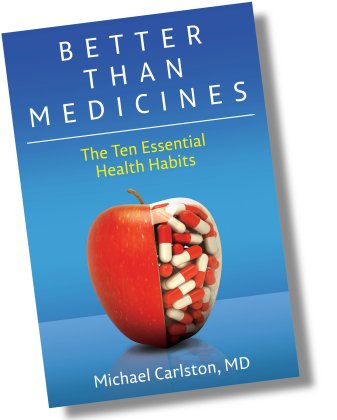

 The mission of this site is to inform and empower you. Representing the sum of my experience as well as the latest clinical research, my perspective is often somewhat at odds with the simplistic articles appearing in the media. Applying the information here you can become healthier, stronger and hopefully happier. Look around and let me know what you think.
 Best,
Michael Carlston, M.D.