




What is complementary medicine?
What Is Alternative/Complementary/Holistic Medicine?
This question parallels the ancient, “How many angels can dance on the head of a pin?”. It is a tough one to answer. Very few people even accept the term “alternative” as the correct one to use. This word implies that it is different and “instead of” conventional medicine. Well, the reality is that only a small minority of Americans who use “alternative medicine” use it instead of conventional medicine. Most people use alternatives “in addition to” conventional medicine, or “instead of” when the problem seems better suited to the alternative approach. Sounds like brilliantly good judgment to me, and the reason I prefer the term complementary”.
Conventional medicine has defined alternative medicine as “other”, as something different from what we conventional docs do. In one of the first big studies of alternative medicine usage, Harvard researchers defined alternative medicine as therapies not taught in conventional medical schools. When I conducted the first national survey of alternative medical education in US medical schools 4 years later, we learned that fully 1/3 of US medical schools were in fact teaching their students about alternative/holistic medicine. Only three years later 80% of US medical schools were teaching about alternative medicine. So the definition of alternative as “other” flew out the window as fast as it flew in.
Another perspective on this is that the therapies we have defined as “alternative medicine” are what 80% of the world presently uses for health care. Furthermore, it wasn’t so long ago when all of humanity used these techniques for health care. How can a majority practice be labeled alternative? Is it just because of antagonism or does the term have meaning? While homeopathic physicians in the early 1800’s prescribed the same medicines used by modern homeopathic physicians, patients of “conventional” physicians were treated with blood-letting and toxic doses of mercury and arsenic. It seems to me that homeopathy then, looked more like today’s conventional medicine than did conventional medicine. I am afraid labels can be more political than enlightening.
Probably the most important way of looking at healing therapies is by the criteria most important to patients - Does it work? Some then suggest using the label “conventional” for all therapies that have been proven effective and “alternative” for the others. As the majority of therapy we conventional physicians use in clinical practice is accepted to be unproven this division isn’t such a clean one either.
In my opinion, these labels get in the way more than they help. When we try to use them to pigeon hole an entire approach to healing we choose to remain ignorant. Dogmatically assuming that something is good because it is labeled conventional or homeopathic is naïve. We have so much to learn and so much to gain by examining the process of healing. It is foolish to stick our heads in the sand and choose not to look.
It is possible to make some generalizations about the full-fledged “systems” of complementary medicine. Homeopathy approaches patients wholistically and views symptoms as a functional attempt of the organism to heal itself. Acupuncture and Ayurveda view the patient’s disease as an imbalance of energies in the body and uses various means to restore that balance. The use of herbs varies tremendously throughout the world in therapeutic expectations of certain herbs and philosophic basis for clinical application.
My first exposure to alternative/holistic medicine was probably my relatives’ use of a canning gelatin to relieve arthritis pain. Then in 1971 I learned about meditation and became a vegetarian. Since these first steps I have spent much of my life learning about various aspects of health. Those interests seemed incompatible with a medical career to some. In college a guidance counselor discouraged me from applying to medical school because my interest in nutrition would be more appropriate for a nutritionist than a physician. My advisor, and Sanskrit Professor won out though when she insisted that, given my lack of ability as a linguist, medical school would be a great idea.
My interest in alternative medicine created many challenges during my professional training and later in practice. I quickly learned to keep my interest quiet because of prejudicial attitudes from faculty and classmates. Never being one much for quiet I started a committee in medical school which organized elective training in “holistic medicine” which continues now 25 years later.
It is gratifying to see the waning of those entrenched prejudices. In fact, oddly I find myself in agreement with the editors of the New England Journal of Medicine who wrote that there is not alternative and conventional medicine there is just good and bad medicine. As scientists we must investigate with open minds remembering that the patient’s well-being is all that matters.
As the founder of homeopathy wrote:
“The physician’s highest calling, his only calling, is to make sick people healthy, to heal as it is termed.”
- Samuel Hahnemann Organon of Medicine



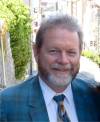 The mission of this site is to inform and empower you. Representing the sum of my experience as well as the latest clinical research, my perspective is often somewhat at odds with the simplistic articles appearing in the media. Applying the information here you can become healthier, stronger and hopefully happier. Look around and let me know what you think.
 Best,
Michael Carlston, M.D.