
ALTERNATIVE M.D.
WHEN IT COMES TO TRADITIONAL AND ALTERNATIVE MEDICINE, FEW PEOPLE ARE AS WELL QUALIFIED TO DISCUSS AND PRACTICE BOTH AS SANTA ROSA PHYSICIAN MICHAEL CARLSTON
Sunday, June 17, 2001
By MIRIAM SILVER
When patients go to Dr. Michael Carlston, the first thing they’re offered is a cup of water.
“It’s a nice thing, a reminder to me that people are a guest in my office,” he said.
But politeness is not everything. The offer is also kind of a test.
“If they say no, then I am going to consider whether they are getting enough water,” he said.
For Carlston, a conventionally trained family practice physician whose bent toward alternative medicine has shaped his practice, pushing water may be more important than pushing pills.
Eight glasses of water a day, a patient comes to understand after a session with Carlston, is a “no-brainer” in things to do to stay healthy, like exercising, taking vitamins and getting enough sleep.
“I think prevention is so important. The weird thing is so many things which are so important or preventive are obvious, like water,” Carlston said.
Carlston, 46, who committed himself to treatments outside the conventional curriculum while still in medical school 24 years ago, is now in vogue.
He is at the forefront of a growing American medical trend that combines conventional approaches, using drugs and high-tech equipment, with other, alternative practices geared more to mental well-being and overall lifestyle.
Santa Rosa cardiologist Joel Erickson, who thinks alternative medicine has improved conventional medicine, said Carlston bridges the gap between the two practices.
“He is well-respected, and he plays an important role in the community because he is a line that helps bring all of the medical styles together,” Erickson said.
Since the release in 1993 of a groundbreaking Harvard study on alternative medical practices, Americans have been gravitating more and more toward non-conventional approaches that include homeopathy, acupuncture, herbal treatments, massage and biofeedback.
One in three Americans now spends money and time with practitioners of alternative medicine and treatments. According to a follow-up study, authored by Dr. David Eisenberg, 83 million Americans spent $27 billion on alternative medicine and treatments in 1997.
Visits to practitioners of alternative medicine rose to 629 million in 1997 from 427 million in 1990, while visits to so-called establishment docs dropped to 386 million in 1997 from 388 million in 1990.
“It was inevitable; I knew it would happen. I just didn’t know it would happen so abruptly,” Carlston said, likening the publication of the Eisenberg study “to the fall of the Berlin Wall in medicine.”
“The real truth is that people have been addressing this for a long time. You can’t have what 80 percent of the world uses for health care and there be nothing of value in it,” he said.
Chain drugstores stock shelves with herbal medications like St. John’s wort and milk thistle, along with an array of vitamins and herbs whose advocates say aid in reducing prostate cancer, heart disease, memory loss, arthritis and hormonal imbalance, among other things.
In 1995, a third of American medical schools offered courses in alternative medicine. A 1998 study by the Association of American Colleges found 82 percent of medical schools offered alternative medicine courses.
“Conventional medicine is starting to recognize that there are other ways of going about things, and we need to look at those carefully,” said Carlston, one of a half-dozen homeopathic physicians in Sonoma County.
A born skeptic who is doctor, teacher, writer and researcher all in one, Carlston insists vigorous clinical and academic research has to be done of both conventional and alternative medicine.
“I have sort of been a pain on both sides,” he said.
Cardiologist Erickson said this two-sided approach makes Carlston effective:“The thing that is particularly good about Mike is he’s got all the medical training and background and the respect that comes from that medical training and background, as well as other alternative approaches.”
Sonoma County health care consultant Bob Shirrell thinks more people are gravitating to alternative practitioners because they are fed up with changes in health insurance and with their doctors, who are equally frustrated.
“More and more people are losing faith in medicine. What we’ve got is a dysfunctional system because the doctors have been screwed and they want you to know it. It gives you the impetus to say there must be a better way,” said Shirrell.
Santa Rosa family practice doctor Elizabeth Blount said it is in this wake that Carlston practices. Many patients spend money out of their own pockets to see Carlston, in addition to visiting their own doctors covered by health insurance.
“He doesn’t just try to take over or steal the patient. He really works in a complementary way with the primary doctor. He works with you,” Blount said.
“I am very open-minded toward considering alternative forms of medicine as long as I feel it is safe. I really trust him in doing things that are safe, nothing too `out there.’ It is not like it is something that he dabbled with 15 or 20 years ago. He is so actively on the forefront and in touch with the literature. He is invited to lecture all over. He is nationally considered one of the leaders and educators in that field, and that makes me comfortable,” Blount added.
Indeed, Carlston regularly gets called by top medical schools and conference organizers to lecture on alternative medicine.
In the past six months, he was recruited to help develop courses on alternative medicine for the University of Texas and the University of Maryland.
He has taught alternative medicine at University of California at San Francisco and to medical residents at Sutter Hospital. He is completing the first homeopathy textbook for medical students. He is one of 11 medical advisers at Onebody.com, an Emeryville-based company that provides consumers and health professionals with online information on alternative medical services.
Carlston has a six-page curriculum vitae that details 20 years worth of teaching at medical schools and residency programs, guest lecturing at medical conferences, research work for places like UC Davis and the National Institutes of Health, published studies and professional board memberships.
Things have changed dramatically since medical school at the University of Minnesota during the late ’70s when his peers and advisers considered him an outsider.
“The nicest response I had was from this one medical student who said: `You seem nice and intelligent and hopefully you will learn how wrong you are,’ ”
Carlston said.
To the contrary, Carlston was learning other lessons. He studied with any homeopathic doctors he could find during both medical school and residency, spending part of his residency in Ohio, researching and working with a homeopathic doctor there.
During his medical residency in his hometown of Minneapolis, Carlston had an early brush with the ancient Asian culture of the Hmong people fromSoutheast Asia.
An 18-year-old Hmong immigrant came in to the emergency room, severely ill with a brain abscess. Carlston and others recommended operating. While the Hmong leader agreed, the young man’s mother said no. The boy was given steroids. His vomiting stopped, and he left the hospital.
“So nothing was ever done. Last I found out, years later, he was alive and doing well,” Carlston said.
But Carlston was already attuned to that kind of mystery. As a college student, his chronic eczema was treated by a homeopathic doctor after conventional Western medicines had complicated his problems.
>From that, he decided to enhance his traditional medical study with homeopathy. Homeopathy is a system of medicine developed by a German physician in the late 18th century. It is based on a principle of “like cures like.” Disease and chronic problems are treated using minute, highly diluted doses of the same substances that, in large doses, can cause it.
There are about 1,600 homeopathic remedies, which Carlston said work better than conventional medicine on chronic problems like allergies. Homeopathy does not work well with acute and end-stage diseases like cancer and heart disease, where conventional medicine needs to be included, he said.
“All these things out there of benefit to people were rejected out of hand. And that’s wrong, especially because patients suffer,” he said.
Once ostracized, the pariah is suddenly big man on campus, and people are listening.
Earlier this year, while a keynote speaker at a conference at University of California at San Diego Medical school, Carlston supported a study that said homeopathic treatment for fatal diarrheal disease in Third World children was effective. A doctor in the audience criticized Carlston for taking that position.
“The dean apologized to me,” Carlston said. “That is how times have changed. That wouldn’t have happened 10 years ago.”
He admits constant research and reading — he spends about two hours a day reading — sometimes prove him wrong.
“I’ve had opinions which I have to change as time goes by. I used to think that taking vitamins was really wrong, because philosophically it didn’t feel like the right thing. But then the research comes along and you look at enough studies, you have to change,” he said.
A man who practices what he preaches, Carlston is practically a fanatic about drinking water, taking vitamins and exercise. He plays, coaches and referees soccer, and organizes backyard games of family soccer with his wife and three kids. He runs with his youngest daughter, who is 11.
He is a busy man: seeing patients, working on his book, reading the newest medical research and sending out e-mail newsletters to patients on issues ranging from sun protection to sports injuries to Alzheimer’s disease.
His office reception area is a virtual bulletin board of his diverse interests — news clippings and pamphlets, the latest on obesity, vitamins and dairy products.
He works hard to keep up, but doesn’t worry if a patient is the one who brings him up-to-date.
“I like having informed patients. I like having people who ask questions. I learn things from my patients. I first learned about glucosamine (a popular herbal remedy for arthritis) from a patient years ago,” he said.
He crams ideas, examples and philosophies into almost every point he makes, which makes him one very fast talker.
“Oh yeah, I talk too much. I become an evangelist,” he said without apology.
“I have a patient, a very intelligent woman, a Ph.D. in her mid-60s. She just did not want to believe that exercise is important. I wanted her to look at the studies with me. It took three years, and now she is converted and exercises religiously. I don’t give up.”
Talking too much would probably get him in lots of trouble with his HMO if he were a member of one, but Carlston is not. He rejected that growing trend long ago in Minneapolis.
“As a homeopath, I already end up making a whole lot less than other doctors, anyway. I see at the most four patients an hour. Typically it is two. Most doctors see eight. With new patients, I will spend an hour and a half,” he said.
That is what Carlston likes most about his work, getting to really know his patients, spending lots of time talking, asking a lot of questions about their diet, their vitamins, what they are doing, what they are thinking, getting to know the whole person.
“There are no routine treatments. Everyone has to be treated individually. That is exactly what homeopathy is all about,” he said.
Carlston remains humbled by the mystery of healing, of life and of death. And one of his most memorable experiences continues to haunt and intrigue him.
As a medical resident, he had become close friends with a patient with cancer that had metastasized to the brain. She was clearly dying, and other than to ease her pain, nothing more could be done. Near the end, Carlston went to her and told her it was OK to let go, to die. She died within a minute. He has no medical explanation.
“It was a wonderful experience. It was one of the greatest experiences of my professional life. I am a researcher. I am a skeptic. To have something like that cracks the door open, to say, `Well, we don’t understand everything. We just keep on trying.”’
You can reach Staff Writer Miriam Silver at 521-5403 or e-mail [email protected].
Caption:
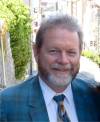
1: Dr. Michael Carlston, whose homeopathic practice is based in Santa Rosa, encourages patients to look at alternative health care. He is a family practice doctor and researcher who has been teaching at medical schools and lecturing for 20 years. He teaches at UC San Francisco and is writing a textbook on homeopathic medicine.
2: Carlston with the contents of an early 19th century box full of homeopathic remedies, many of which are still used today in his practice.
3: Dr. Michael Carlston,who practices homeopathic medicine, also is an avid soccer player and referee. Here he’s referee at a Sunday soccer match.
Infobox:
DR. MICHAEL CARLSTON
What: Santa Rosa family
Practice physician specializing in homeopathy
Age: 46
Background: A native of Minnesota, moved to Santa Rosa in 1985
Education: Medical school at University of Minnesota, M.D. in family practice
Professional interests: Teaches, writes and lectures on homeopathy, is completing a textbook on homeopathy for medical school students
Quote: “The real truth is that people have been addressing this for a long time. You can’t have what 80 percent of the world uses for health care and there be nothing of value in it.”
© THE PRESS DEMOCRAT and may not be republished without permission.


 The mission of this site is to inform and empower you. Representing the sum of my experience as well as the latest clinical research, my perspective is often somewhat at odds with the simplistic articles appearing in the media. Applying the information here you can become healthier, stronger and hopefully happier. Look around and let me know what you think.






Leave a Reply