





March 21, 2008
Dear Patients
This newsletter contains my most recent blog for Veria. I’ve been working hard on a big article on allergies for them as well, just in time for the spring allergy season. Whenever I get to dig into a topic I enjoy it because the process of communicating it clearly to readers helps me understand it better. In addition to the blog, I contribution to Veria’s health information resource called Veriapedia. My recent contributions there include Autism, Allergies, What is Complementary Therapy, and some articles on homeopathy.
I would like to call your attention to a series of recent vitamin recalls. The Vitamin Shoppe’s Especially for Women multiple vitamin was contaminated with lead. A class action suit was just settled with an agreement to refund the purchase price or provide 125% of the price as store credit. This follows Hero Naturals’ Yummi Bears recall of batch HN60881 for containing excessive amounts of vitamin A and AARP’s recall of its Maturity Formula because it did not dissolve thus hampering absorption.
It has been quite beautiful lately with the temperate weather and blossoming trees everywhere. Hopefully that beauty has been drawing you back outside to start rebuilding your vitamin D stores. In a couple of weeks I will be attending a meeting on vitamin D including three of the top experts in the world. Given the topic, it is well located down in San Diego.
My Veria Blog
Veria Magazine link
Best
Michael Carlston, MD
www.carlstonmd.com
Algae
H. pylori and Asthma Rates
Algae
At the risk of dating myself, the stimulus for this topic is an early 1970’s science fiction obsession. At the time, we had begun to recognize and grapple with hunger as a global issue. In 1970, Norman Borlaug, a graduate of my alma mater, won the Nobel Peace Prize for his work developing crops that could grow in new environments, greatly increasing food supplies in impoverished regions of the Third World. Earth Day was created to raise awareness about the stresses humanity was placing on an environment of limited resources. Environmentalism, particularly concerns with the food supply, became an obsession among a significant part of American society, even leading to a number of films addressing this issue.
One very creative writer inspired a popular film proposing that the solution was readily apparent – we should access the most highly compatible source of nutrients (other humans) and process our dead into tasty morsels. There were some problems, though. The food supply was still somewhat limited, and the authorities had to develop creative marketing techniques “selling” the idea of an early but pleasant death. Their marketing department simply could not find a solution to the aesthetic issues, so they kept the source of the nutrients secret, that is until Charlton Heston came along and screamed, “Soylent Green is people”, as they carried him away.
One of the inspirations for that movie and others was the discovery that algae can be a very rich source of nutrients. (Soylents Yellow and Blue were made from algae and plankton). Aztec warriors reputedly carried cakes of dried fresh water algae as food rations when they were on the march. Algae contain very high amounts of many nutrients, including protein, many vitamins (B12, carotenoids, C, E, K) and minerals including calcium and iron. Algae are used as nutrient source in the commercial production of vitamins (carotenoids, D). Recent studies found 196 mg of iron in only 100 grams (about 3 ounces) of a certain species of marine algae. As the average adult needs around 18 mg of iron a day, you can see what a potent food source algae can be.
Algae can be easy and inexpensive to grow, again carrying promise of dramatically improved nutrition for many people. For those individuals choosing a vegan lifestyle, algae are a vitally important means of meeting otherwise challenging nutritional needs.
Large-scale efforts are underway to develop biological energy production using algae as the source. Algae produce hydrogen, non-petroleum biodiesel and ethanol, all of which can used as cleaner burning fuels than those currently in widespread use. Algae uses the nasty “greenhouse gas” carbon dioxide as fuel, cleaning the environment as it in turn becomes a cleaner energy source for human bodies and machinery.
There are safety issues when using algae as a food source. Marine algae cause the “Red Tide”, leading to bans on shellfish consumption at certain times of the year. Blue-green freshwater algae can also produce deadly toxins. It is best to stick to specific species (spirulina and chlorella) that have been used safely for many hundreds of years throughout the world. If the algae was farmed and tested, you can have even greater confidence that your purchase is not contaminated by undesirable wild toxin-producing species.
H. pylori and Asthma Rates
In another example of the good bug/bad bug balance of human immunity, researchers have learned that infection with H pylori is associated with a markedly reduced risk of several allergic diseases in children. Analyzing data on over 3,000 children from the National Health and Nutrition Examination Survey (NHANES), investigators learned that those with H. pylori infection were 53% less likely to have asthma. They were also less likely to have eczema, wheezing, allergic runny noses and rashes. These researchers speculated that the ongoing eradication of H. pylori, concurrent with the rising rate of asthma, suggests the possibility of a cause and effect relationship. While this is a sound theory, based upon a great deal of similar information linking alterations in the bacteriologic environment and increased risk of allergic disease, H. Pylori is only one of many bacteria affected in this changing ecology internal and external to all of us.
No Responses to “March 21, 2008”
Trackbacks/Pingbacks
- Mold and Asthma - Carlston MD | Carlston MD - […] side of the problem is known as the Hygiene Hypothesis. I’ve been writing about it for years (and) as…


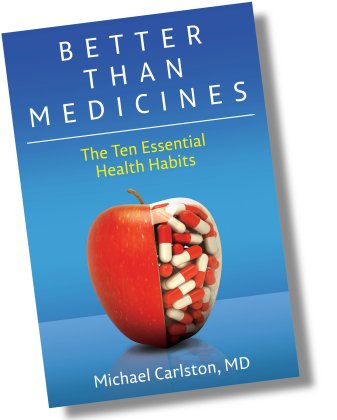

 The mission of this site is to inform and empower you. Representing the sum of my experience as well as the latest clinical research, my perspective is often somewhat at odds with the simplistic articles appearing in the media. Applying the information here you can become healthier, stronger and hopefully happier. Look around and let me know what you think.
 Best,
Michael Carlston, M.D.


Leave a Reply