Slowly people are letting go of their love of NSAIDs (ibuprofen, ADVIL, Naproxen, NAPROSYN, etc). They are far from benign painkillers. Many people mistakenly view “inflammation” as an enemy. With that mistaken understanding, they love the idea that Non-Steroidal-Anti-Inflammatory Drugs (NSAIDs) block inflammation. As I’ve been writing and telling patients for years, “inflammation” is also known as the physiological recovery process. Sure, too much of anything, including inflammation is bad, but too little is also not healthy. NSAIDs start damaging your kidneys and raising your risk of a fatal heart attack from the very first pill. NSAIDS have now been shown to block the muscle developing impact of exercise. Another article published in the August 21, 2017 issue of Acta Physiologica (a prominent physiology journal, nearly 130 years old) included: “young individuals using resistance training to maximise muscle growth or strength should avoid excessive intake of anti-inflammatory drugs”. I would add that the impacts are even worse for older individuals. One reason I enjoyed working the medical tent at major US marathons (Boston Marathon, USA Olympic Trials, Houston Marathon, Marin Corps Marathon) was that it was the only place my colleagues shared my concerns about NSAIDs. Those not-so-benign over the counter pills are a major risk factor for serious and even fatal problems for endurance athletes. When I was Medical Director of the Santa Rosa Marathon, I banned NSAIDs from the medical tent. Runners often think they should take ibuprofen or some other NSAID before a race and they would come to the medical tent asking for some. When I refused them,the runners were annoyed, but I explained that I didn’t want to see them later that day for a heart attack or hyponatremia (the most common cause of marathon deaths). The adverse effects of NSAIDs are less immediately evident outside of endurance events, but the impacts are no less severe. Remember that popping NSAIDs is just not good for you. Use them rarely and be aware that there are many better options....

Following up on the article I wrote about electromagnetic field treatment of the deadliest brain cancer the FDA has now approved the device, manufactured by Novocure, for treatment. This is just one element in the growing science delineating biological impacts and therapeutic possibilities of electromagnetic fields. As modern humans we are bathed in these fields largely created by our own technology. Denying the possibility of health effects has been a dangerous, anti-scientific intellectual “disease”. I wrote more about this in BETTER THAN MEDICINES, as well as the following blog posts (What You Can’t See, Electromagnetic Radiation and Asthma) A prominent physician I know recently told his story about suddenly developing a disabling sensitivity to electromagnetic fields. Given the biases in medicine about crazy people wearing tinfoil hats, etc., he was courageous to do so. We have learned that birds can apparently see/perceive latitude and the earth’s electromagnetic fields. (See Jennifer Ackerman’s The Genius of Birds). Is it unthinkable that some of us are affected, even harmed by electromagnetism? First, consider the fundamentals. Thinking is an electrochemical process. As chemistry is the elder and more easily understood science, those aspects of brain function have garnered the lion’s share of investigator’s attentions. However measuring patterns of electrical activity in the brain is another way to investigate brain processes. One important tool, the EEG machine (ElectroEncephaloGraph) has been vitally important to clinicians in the process of diagnosing and managing seizure activity for over one hundred years. As we grow in our understanding of the electromagnetic activities of our brains, it isn’t much of a leap to consider using electricity to alter brain function. Sounds great. Then Frankenstein’s monster jolts into my mind. As Shakespeare wrote: “Within the infant rind of this small flower, poison hath residence and medicine power”. Treatments always carry risk as well as benefit. How do we go about it? Precisely how we can safely and effectively administer electromagnetic energy to a brain is a great mystery fraught with dangerous possibilities as well as healing potentials. A very interesting study of electromagnetic pulses got some decent media coverage earlier this year. Researchers at the University of Pennsylvania discovered that electromagnetic pulses could either improve or impair memory functions. When the pulses were administered during times patients’ brains were functioning well, their memory abilities dropped. Conversely, when the pulses came during poor functioning times, brain function improved. This might not sound like much, as the best result was no better than the subjects brains were already functioning at good times. It didn’t...
Posted by
Michael Carlston on Jul 29th, 2017 in
Exercise |
0 comments 
Our bodies are designed for movement. There are many different ways to move, each good for us for different reasons. Most people know about cardio workouts, exercise that pumps up your heart rate. Stretching is another and, important as it is, maybe the only kind of exercise that is over rated. Although less popular, most people are still aware of strength training, and some even know that balance training is a good idea. The power that exercise, in whatever form, has to transform our health and our bodies is practically magical. Unfortunately, perhaps the most magical type of exercise is the most often overlooked. The great majority of you are missing out on this form of exercise. You should change that because this kind of exercise turns out to have uniquely beneficial effects and those effects are gained very quickly. Ok, what am I talking about? The answer is High Intensity Interval Training (HIIT). Even those who know something about HIIT nearly always have the wrong impression. The worst mistake is that they assume HIIT is only for strong athletes. That is completely wrong. HIIT has long been a part of serious athletic training. When I was a high school soccer player, we began our two-a-day summer trainings by jogging down the street a mile to the soccer field at an elementary school. In those days soccer was displaced by the football team that got all the fields on campus. Every practice session ended with a dreadful set of interval sprints, the point of which seemed to be as much about proving that the coach was in charge as it was about any fitness boost we might achieve. If you watch the movie, “Miracle On Ice”, the story of the USA gold medal hockey team of 1980, you can experience (thankfully from the comfort of your couch) the “Herbie” intervals that tormented the USA players. This style of HIIT was, not so lovingly, named after their brilliant and determined coach, Herb Brooks. History shows that worked out pretty well. As I am certain many of you with athletic pasts can recall, intervals were NOT fun. That does not need to be the case. Actually, I find HIIT particularly useful for the very individuals one would think would have the biggest reasons not to do it - people with serious joint trouble and other fitness limitations. That probably doesn’t make sense, so I need to explain a bit more. What exactly is HIIT? HIIT stands for High Intensity Interval Training. Some...

A medical news headline the other day about the long term impacts of lead contained a couple of meanings for me. The obvious one was that minimal lead exposures in childhood had life-long impacts, specifically impairing intellectual ability. We now know that lead exposures that were considered safe long ago were not at all safe, and continuing to this very day, those long ago lead exposures still influence those people. The experts who created the standards way back then were flat out wrong. Herbert Needleman, MD, who thought more carefully and critically, endured decades of criticism from industry as well as academic colleagues. He was right. They were wrong. The less obvious meaning is just as important, but in a much broader way. That lesson is be wary of experts. When I was an overweight 13 year old running down the road I thought I was doing something for my health. I was, but I was also accidentally learning the most important lesson of my medical career and one you need to absorb yourself. That was before the big running boom, so as an oddity, my teachers were the people driving by. They honked, hooted, laughed and shouted out all sorts of comments. None of them were encouraging, and few of them were anywhere near as funny as they seemed to think. The lesson was that even when a lot of people think you are wrong, you might be right. You need to ignore their pressures to “toe the line” of conformity, and find out for yourself instead. Sure, I was stubborn/determined to start with, or I wouldn’t have persisted. However, my experience confirmed that ignorance abounds. It was a fundamental lesson for me to learn. My professional experience since then taught me that the most dangerous founts of ignorance are people who are supposed to know more than the rest of us, “experts”, in another word. I started working in the hospital as a 17 year old in 1972. Every day since then I’ve witnessed a bipolar melange of wonderful human caring, determination and great science lumped together with so much ridiculously obvious wrong-headedness. “Expertise” in the form of arrogant overconfidence is often to blame. Certainty creates and perpetuates ignorance. When you think you know-it-all, why would you second guess yourself? A bit more humility and common sense would fix most of the mistakes. There is a great deal of talk about the death of expertise. Physicians howled for years about patients asking questions after reading something on the internet. The howls...








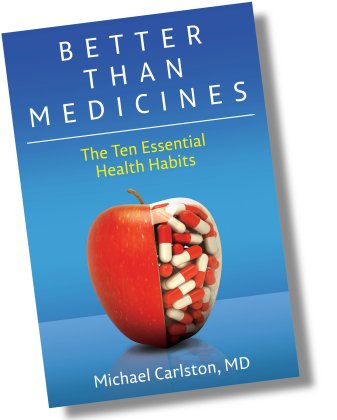

 The mission of this site is to inform and empower you. Representing the sum of my experience as well as the latest clinical research, my perspective is often somewhat at odds with the simplistic articles appearing in the media. Applying the information here you can become healthier, stronger and hopefully happier. Look around and let me know what you think.