





Currently Browsing: environmental toxins  Following up on the article I wrote about electromagnetic field treatment of the deadliest brain cancer the FDA has now approved the device, manufactured by Novocure, for treatment. This is just one element in the growing science delineating biological impacts and therapeutic possibilities of electromagnetic fields. As modern humans we are bathed in these fields largely created by our own technology. Denying the possibility of health effects has been a dangerous, anti-scientific intellectual “disease”. I wrote more about this in BETTER THAN MEDICINES, as well as the following blog posts (What You Can’t See, Electromagnetic Radiation and Asthma) A prominent physician I know recently told his story about suddenly developing a disabling sensitivity to electromagnetic fields. Given the biases in medicine about crazy people wearing tinfoil hats, etc., he was courageous to do so. We have learned that birds can apparently see/perceive latitude and the earth’s electromagnetic fields. (See Jennifer Ackerman’s The Genius of Birds). Is it unthinkable that some of us are affected, even harmed by electromagnetism? First, consider the fundamentals. Thinking is an electrochemical process. As chemistry is the elder and more easily understood science, those aspects of brain function have garnered the lion’s share of investigator’s attentions. However measuring patterns of electrical activity in the brain is another way to investigate brain processes. One important tool, the EEG machine (ElectroEncephaloGraph) has been vitally important to clinicians in the process of diagnosing and managing seizure activity for over one hundred years. As we grow in our understanding of the electromagnetic activities of our brains, it isn’t much of a leap to consider using electricity to alter brain function. Sounds great. Then Frankenstein’s monster jolts into my mind. As Shakespeare wrote: “Within the infant rind of this small flower, poison hath residence and medicine power”. Treatments always carry risk as well as benefit. How do we go about it? Precisely how we can safely and effectively administer electromagnetic energy to a brain is a great mystery fraught with dangerous possibilities as well as healing potentials. A very interesting study of electromagnetic pulses got some decent media coverage earlier this year. Researchers at the University of Pennsylvania discovered that electromagnetic pulses could either improve or impair memory functions. When the pulses were administered during times patients’ brains were functioning well, their memory abilities dropped. Conversely, when the pulses came during poor functioning times, brain function improved. This might not sound like much, as the best result was no better than the subjects brains were already functioning at good times. It didn’t...
  This article might appear to be about thallium and rocket fuel in your food, but it really isn’t. We all agree that it is important to be careful about what we eat. The most important reason to be careful is not because of what we know. More important is what we don’t know. Many people think they have a healthy, or even excellent diet because they eat organically, avoid gluten or maybe because they are vegan. Those can be good ideas for some, but a healthy diet is too slippery to grasp quite so easily. Concerned about the quality of food, organic food has become very common. This is a welcome and dramatic change from when I first joined an organic food co-op 45 years ago just to get my hands (and teeth) on such rare produce. Although folks are wisely cautious about pesticides, herbicides, fertilizers and GMOs, very few people consider the water that went into their food. That’s a big mistake. In my book, Better Than Medicines, I recounted a study that revealed this problem nearly 20 years ago. Over 80% of the organic greens sold in the San Francisco Bay Area were found to contain rocket fuel! How could that be? It turned out that the storage tanks at Edwards Air Force base were leaking the fuel into the regional ground water. As I also recounted in Better Than Medicines, there have been incidents of deadly e coli (stool bacteria) spread to organic crops in water run-off from neighboring cattle ranches owned by the same conglomerate. “Organic” used to mean small family farms with fastidious attention to the crops. It is an entirely different world today. The quality of water applied to crops is a gaping wide and serious blind spot in our knowledge about the safety of foods we consume. It’s a big deal, but it’s still just one element of our ignorance. Your food is a product of the environment in which it is grown. Here is another example: Just about every patient I see believes that the best thing they do (or should do) to make their diet perfect is to consume huge quantities of dark leafy green veggies. In my official role as a troublemaker, I have to shatter that illusion. Although I value the rich vitamin, mineral, polyphenol and alkaloid content of those earthy greens, that rich intensity also leads to problems. First, many think of plants as a wonderfully gentle form of life here to provide humans with nutrients. This rainbows and sunshine...
  The US Preventive Services Task Force (USPSTF) recommends that every American from age 50-70 get a colonoscopy every 10 years. A lot of people are literally uncomfortable with that idea as well as the experience. Consequently some (especially radiologists) have advocated “virtual colonoscopy” which is a nonthreatening way of saying “irradiate my body”. Another method is to test your stool for invisible blood. The old way was to perform what was called a stool guaiac. Guaiac is the resin from the aptly named, Guaiacum tree. It worked, but lots of common foods and supplements messed it up. It also missed finding a significant number of cancers. A new way to test stool, the fecal immunochemical test (FIT) is much more sensitive, accurate and not confused by diet or supplements. It is just as easy to use as the old guaiac test. Compared to colonoscopy, it is far cheaper, safer and the experience is much more comfortable. I recommend it. Many of you are rightly concerned about mercury, especially the risk of accumulating it in your body from eating fish. As fish, especially omega-3 rich seafood, has so many health benefits, wouldn’t you just know there had to be a downside? Generally speaking, as long as you choose fish that are lower on the food chain, your mercury exposure is not so much. What does “lower on the food chain” mean? An animal that eats an animal that ate another animal, also eats every nasty thing each of those animals ate. Those nasty things build up in the animal/fish at the top of that chain of consumption. This is why fish oil from anchovies, mackerel and sardines usually contains very little mercury. Tuna, shark and other big, predatory fish, carry much more mercury and other toxins in their tissues. Hair testing is not reliable for most purposes. It is changed too much by chemicals in the air around you and even more by your shampoo or anything else you put on your hair. Also, as hair testing reflects exposures over the time the sampled hair was growing, it is not a useful measurement of short-term exposures or of exposures that occurred before that snippet of hair grew out. Testing your hair for mercury exposure IS a good idea. Many years ago Greenpeace ran a survey to learn about our mercury exposures. My family all got ours tested then. Although I did not like the large bald spot on my head created by my overly aggressive daughter’s sampling technique, it grew back...
More About the Brain and Electromagnetic Fields
Posted by Michael Carlston on Oct 25th, 2016 in Cancer, environmental toxins, Uncategorized | 0 comments
EMF and Cancer
Electromagnetic fields (EMF) are controversial. Some believe that EMFs can cause health problems, even serious ones. Others don’t think so. We can’t see them and most of us don’t believe we can sense them. So, could this be an example of “what you can’t see can’t hurt you” wishful thinking? The glioblastoma form of brain cancer is one of the most rapidly fatal cancers around. It does not respond well to treatment. A study recently appeared showing a dramatic improvement in survival when patients were treated with alternating electric fields in addition to conventional chemotherapy. This latest study of electromagnetic fields(EMF) and brain cancer is both heartening and worrisome. Improving glioblastoma survival from 4 months to 7 is statistically meaningful and important for those patients, but still disappointing. Three more months is positive, but far less than anyone would hope for. More concerning to me is the inevitable conclusion that if EMFs influence cell growth, doesn’t that mean that EMFs can cause cancers? Anything that can help can also harm just by changing the timing, intensity or other circumstances of the exposure. “Within the infant rind of this small flower, poison hath residence and medicine, power” Shakespeare from Romeo and Juliette With so many electric and electronic devices, we live out our lives in an EMF soup. This study adds to concerns that EMF exposure is not benign. I love my electrical and electronic devices, but I love my health as well. (Image Andrew Rich E+ Getty... Posted by Michael Carlston on Sep 19th, 2016 in Diet, environmental toxins, Uncategorized | 0 comments
It’s Not About the Rocket Fuel (only) - Dietary Diversity
Simple But Neglected Screening Tests - Mercury and Alternatives to Colonoscopy


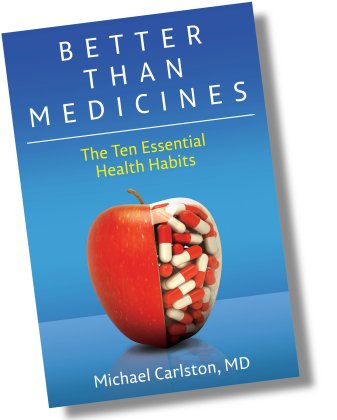

 The mission of this site is to inform and empower you. Representing the sum of my experience as well as the latest clinical research, my perspective is often somewhat at odds with the simplistic articles appearing in the media. Applying the information here you can become healthier, stronger and hopefully happier. Look around and let me know what you think.
 Best,
Michael Carlston, M.D.