




Currently Browsing: Medical ethics  Over just the last few months, a rash of unethical corporate behaviors, all in some way involving monetary influences on health care, have come to light. One was a disclosure about the Harvard Medical School showing that in the 1960s the sugar industry redirected researchers away from the conclusion that sugar contributed to heart disease. We are just now overcoming that bias after how many millions of deaths from heart disease? Whistleblowers inside the CDC filed an ethics complaint against the CDC over corporate influences on their governmental agency. The two major soda manufacturers have been funding nearly 100 national medical and public health organizations, influencing those organizations’ messages about sodas. Despite the heavy and odious competition, the worst might be the latest episode of pharmaceutical companies acquiring a monopoly on a vitally important, but inexpensive drug, and then kicking the price through the roof. The unconscionable arrogance, in this case the drug manufacturer Mylan and EpiPen, is truly horrific. The good news is that most doctors are starting to realize how naive they have been. There is a long road yet to... In another example of pharmaceutical manufacturer greed, prices of concentrated insulin have soared. There is no reason for the increases other than profit. The discovery of insulin by Frederick Banting, who then developed the process of extracting it for medical use with his student Charles Best, saved the lives of many diabetics. Those people had a form of diabetes, Type 1 insulin-deficient diabetes, that is less common now. Today Type 2, insulin-resistant diabetes is all the rage. Type 2 diabetics are usually fine if they exercise and manage their diet properly. However, growing numbers of patients with uncontrollable Type 2, as well as those with Type 1, have to use insulin. Highly concentrated insulin improves the health care and quality of life of those who must use a lot of insulin. From 2007 to 2008 sales of this concentrated insulin rose 71%. As the sales of concentrated insulin rose, the manufacturers recognized an economic opportunity. Since 2007, prices for this concentrated insulin have risen drastically. In 2007, it cost $220. By 2011, the price had jumped to $500. Now it is $1,200! Concentrated insulin, specifically this form of concentrated insulin, is not a new drug. It is 62 years old, nearly eligible for Medicare if it were human. The price of a new drug incorporates research and development costs. It is like an unstable, high maintenance horse, needing a good deal of support to get comfortable and settle down to work. An old drug is like an old work horse. It is steady, familiar and gets the job done; no longer requiring its owner to invest a lot of time to manage the horse. Simply put, there is no reason that this old workhorse drug should suddenly cost so much. On the one hand, a company exists to make money. That is the nature of capitalism. On the other, is it right for corporations to reap “excessive” profits by squeezing money from vulnerable individuals, whose very life would be endangered without the medication? The big answer, NO, is clear to anyone. Determining what “excessive” means and how to fairly regulate the drug industry are more complex issues. The bottom line is very clear. Profiteering in the pharmaceutical industry must... Following up on last month’s controversial statin-boosting recommendations, three weeks ago the Journal of the American Medical Association published an editorial claiming that statins are good at preventing heart attacks in people who haven’t had one. To say that I was skeptical would downplay my reaction. I looked over the article carefully. The author based her opinions largely upon a recent reanalysis of several studies. Her claim was that meta-analysis was very positive, both on the consideration of effectiveness as well as on the matter of adverse effects. In other words, the bottom line was that the positives were substantial, with little risk of problems. Thats not what I’ve read. So, I dug deeper. The article she refers to (Cochrane Collaboration Statin Review 2013) reads a bit differently. The following is from the “plain language summary” section of that article: Of 1000 people treated with a statin for five years, 18 would avoid a major CVD event That is good news to those 18 (ie 1.8%). The big “howevers”, pertain to the adverse effects. Statin studies funded by manufacturers lead us to believe that adverse effects are rare. Partly how they create such low apparent rates of adverse effects is they begin with a “trial period” and then drop anyone who has a problem from the full study. The people who complete the study, and whose experiences are reflected in the relevant study’s conclusions, are then much less likely to report a problem. Independent studies show huge adverse effect rates (over 50% by some conventional academic estimates). No one doubts that statins very commonly cause diabetes. That is very well known. Muscle problems are very common or very rare, depending on what study you read. Other effects, like mental impairment for example, are even less consistently evident in the research. Unfortunately the Cochrane review skimmed over contentions about statin side effects Then I looked into the fine print “conflicts of interest” section. It turns out that the author of the piece is a PAID consultant for three drug companies, and receives research funding from TWELVE! The manufacturers of some of the most popular statin drugs “contribute” to her work. There is a website that tracks MD funding from drug companies (propublica.org) but this only had data on two of those contracts. That “tip of the iceberg” totals nearly $90,000. Why is such ethically tainted commentary accepted in medicine and why is it published in such a prestigious medical journal? Why are docs so easily mislead by drug company...
Unethical Corporate Influences on Health Care
The CDC and the Illness of Our Health Care System
Sometimes I am frustrated with my profession. Other times it is worse and I become disheartened about medicine and health care in general. The good thing is that when I get really upset, I get angry and then take action. Here I go. The Centers for Disease Control (CDC) are a US governmental organization purposed to collect and analyze information about diseases and, WITHOUT BIAS, create guidelines for physicians and the community. The British Medical Journal has discovered that the CDC has been “partnering” with private financial interests. We aren’t getting a handle on the corruption within industrialized medicine. We can’t even claim the pretense of ethical oversight in medicine any longer. This BMJ investigation once again confirmed that there are foxes in the chicken house. The BMJ uncovered several instances where the CDC “partnership” with companies led to recommendations that not only supported the drug company interests, but ones that were also at odds with scientific consensus. Once more we learn that most of the panelists creating the treatment guidelines are employees of the drug companies and device manufacturers who stand to benefit from the “expert recommendations” the panels are empowered to create. This is probably the most depressing medical news I have come upon lately. It is another nasty example of how doctors are blinded by the drug industry. The CDC is considered to be the ultimate, completely reliable, source of important information about disease risk, prevention and treatment. It is not. My colleagues are already too easily deceived by drug company propaganda. The editors of three of our four most highly regarded medical journals have each stated that those publications have become marketing arms of the medical drug and device industries. The problem in those instances is largely the consequence of industry-funded research, practice guideline creation and advertising. Now we know that the “independent” US governmental agency, “the nation’s health protection agency” according to their mission statement , is not protecting us from companies whose misdeeds have led to catastrophic drug pricing even when those companies have earned criminal fines for their misdeeds. Instead the CDC has joined the chorus of miscreants. Tell your physicians that you don’t want to take medications unless you REALLY must. Take responsibility yourself by practicing the health habits that are better than medicines, thereby reducing your need for medications or crisis-oriented medical care. Another unpleasant reality propelling this cycle of ignorance is economic. When you go to a doctor who is cranking patients out the door every 8-10 minutes, that doctor will only have time to listen (briefly) to your concerns...Pharmaceutical Profiteering Must Stop
Posted by Michael Carlston on Dec 30th, 2013 in Medical ethics, Medication, Uncategorized | 0 comments
Doctors, Drugs and Conflicts of Interest


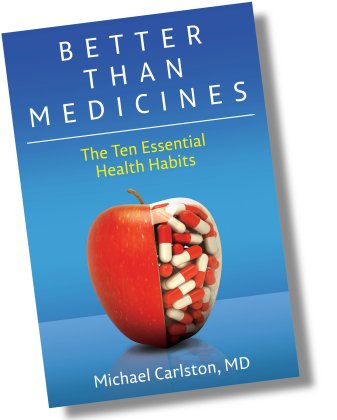

 The mission of this site is to inform and empower you. Representing the sum of my experience as well as the latest clinical research, my perspective is often somewhat at odds with the simplistic articles appearing in the media. Applying the information here you can become healthier, stronger and hopefully happier. Look around and let me know what you think.
 Best,
Michael Carlston, M.D.